Dutse, Jigawa State – June 15, 2026
Governors of Northern Nigeria have called for an urgent and comprehensive overhaul of the country’s security architecture, warning that escalating insecurity threatens the region’s peace, unity, and economic survival.
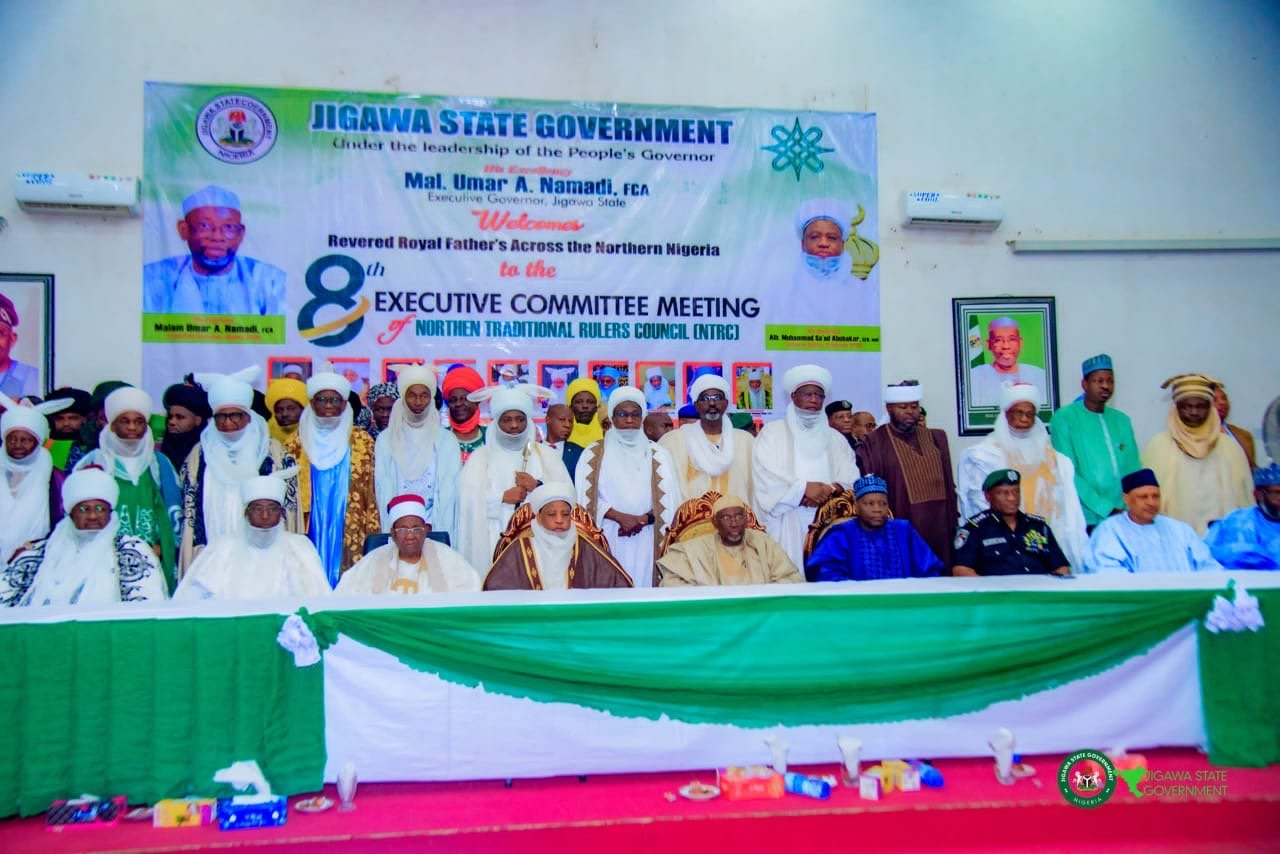
The Chairman of the Northern States Governors’ Forum (NSGF) and Governor of Muhammadu Inuwa Yahaya, made the call on Monday during the meeting of the Northern Traditional Rulers Council in Dutse, Jigawa State.
Speaking on the theme, “Peace, Unity and Development of Northern Nigeria,” Yahaya described the current wave of banditry, insurgency, farmer-herder conflicts, kidnappings and communal violence as the most severe security challenge the region has faced in recent history.
He stressed that conventional approaches to tackling insecurity have failed to deliver the desired results, insisting that Northern leaders must adopt new and decisive measures to confront evolving threats.
“The time has come for decisive action. The old methods are clearly not working. We cannot continue confronting rapidly evolving security threats with outdated strategies and fragmented responses,” he declared.
The governor described traditional rulers as indispensable partners in the fight against insecurity, noting that their grassroots influence and deep community connections make them critical to intelligence gathering and conflict prevention.
Yahaya also condoled with the government and people of Katsina State over the death of retired Major-General Rabe Abubakar while in the custody of bandits, saying the tragedy underscored the reality that insecurity now threatens every segment of society.
“Whether farmer, traditional ruler, governor or retired military officer, no one is safe until everyone is safe,” he said.
According to him, years of violent attacks have displaced millions of residents, forced farmers from their lands, crippled businesses, disrupted education and deepened poverty across the region.
The NSGF chairman revealed that although Northern governors resolved in December 2025 to establish a common regional security framework, implementation had stalled due to unfulfilled commitments by stakeholders.
He, however, announced that the next joint meeting of Northern governors and traditional rulers, scheduled for July 11 and 12 in Kaduna, would focus on practical solutions and the adoption of a unified security position for presentation to the Federal Government.
Yahaya emphasized the need for a coordinated strategy capable of eliminating criminal hideouts, strengthening intelligence-sharing, and ensuring accountability for individuals aiding criminal networks.
Beyond military operations, he linked the region’s security crisis to widespread poverty, unemployment and illiteracy, noting that about 86 million people in Northern Nigeria are living in multidimensional poverty while the region accounts for the highest number of out-of-school children in the country.
He warned that the growing combination of economic hardship and lack of educational opportunities continues to provide fertile ground for the recruitment of young people into criminal and extremist groups.
The governor also expressed support for ongoing discussions on state policing, describing it as a critical reform that could enhance local responses to security challenges.
He urged traditional rulers to strengthen community-based intelligence systems and promptly report suspicious activities to security agencies.
“Traditional rulers are not merely ceremonial leaders; they are essential partners in security, unity and development,” he said.
Yahaya advocated a blend of military and non-military interventions, including increased support for security agencies, expanded access to education, youth empowerment programmes, agricultural development and interfaith dialogue.
He maintained that lasting peace in Northern Nigeria would remain unattainable without significant investments in human capital development, education and economic opportunities.
The NSGF chairman called on participants at the meeting to move beyond deliberations and produce actionable resolutions capable of restoring security and rebuilding public confidence across the region.
“History will judge us not by the meetings we attended, but by whether we succeeded in leaving behind a Northern Nigeria that is safe, secure and prosperous,” he stated.